
A shelter that two people can carry on their backs and a tent that four people can set up from their car and live in for three days do not meet the same needs. Choosing the right tent depends less on how many people it’s designed for and more on how and under what conditions it will be used.
In this guide, we won’t be showing you a single “best tent.” First, we’ll help you determine your camping style, and then we’ll evaluate the appropriate capacity, weight, weather protection, and living space. Real-world examples from the Ersin Outdoor collection will show how these decisions play out in practice.
For camps you’ll reach on foot, the total weight and volume of your gear are the key factors; for car and family camping, the floor plan, standing headroom, and entry layout are more critical. For summer use, ventilation is a priority, while structural durability is key for routes where wind and snow are expected. Read the capacity label in relation to your sleeping pad dimensions, and the seasonal label in conjunction with actual weather conditions and the manufacturer’s usage limits.
1. Identify Your Camping Style
Your first step shouldn’t be to open the product page; instead, start by figuring out how you’ll get to the campsite and what you’ll do once you’re there. Even the same person might need different types of tents depending on the route.
For example, for a hiker, carrying an extra kilogram of gear every day can make a significant difference. For a family that parks their car next to their tent, that same difference is generally less important; being able to sit inside with the kids when it rains is more valuable. It’s not possible to address both of these needs with a single “best-of” list.
For first-time campers, a good place to start is by following the steps for transportation, weather, and gear preparation outlined in the first camping planning guide.
2. Calculate Capacity and Living Space
A tent’s capacity usually refers to the number of people who can sleep in it. However, just because four people can fit inside a tent doesn’t mean that four people can comfortably get dressed at the same time, store their bags inside, or sit there in the rain. The actual usable space should be considered in conjunction with the floor plan and the slope of the walls.
Plan Your Sleeping Pad Layout on Paper
A width of just 120 cm seems sufficient to lay two 60-cm-wide sleeping pads side by side. However, this calculation changes if the foot end of the tent tapers or if the walls slope near the ground. Compare the measurements at the head and foot ends of the inner tent with the actual dimensions of the sleeping pad you’ll be using. If you are tall, also make sure the foot end of your sleeping bag does not constantly touch the inner tent.
Why Do Vestibules and a Second Door Matter?
An entryway or storage area is useful for keeping wet boots and bags separate from the sleeping area. On a hike where two people wake up at different times in the same tent, two separate entrances can prevent one person from having to step over the other. In family tents, the layout between the sleeping compartment where children sleep and the common living area is even more important.
3. Trekking, Solo Camping and Bikepacking
When trekking, a tent isn’t just equipment used at night—it’s a load you carry all day. Therefore, consider the total weight, including the tent body, rainfly, poles, stakes, and carrying bag. Manufacturers sometimes list the minimum weight and packed weight differently; be sure to use the same definition when comparing them.
Solo camping: compact size or extra space to move around?
For a solo camper, a one-person tent might make sense in terms of portability. On the other hand, a two-person model gives a solo hiker more room to maneuver when packing their backpack in bad weather or using a wider sleeping pad. If your top priority is long-distance hiking, remember that you’ll have to carry every extra piece of gear.
On bike or motorcycle routes, pack length is just as important as total weight. The tent poles and carry bag must fit on the handlebars or into the bag system. Just because a product’s name says “ultralight” isn’t enough on its own: check the actual weight, pack size, and usage conditions.
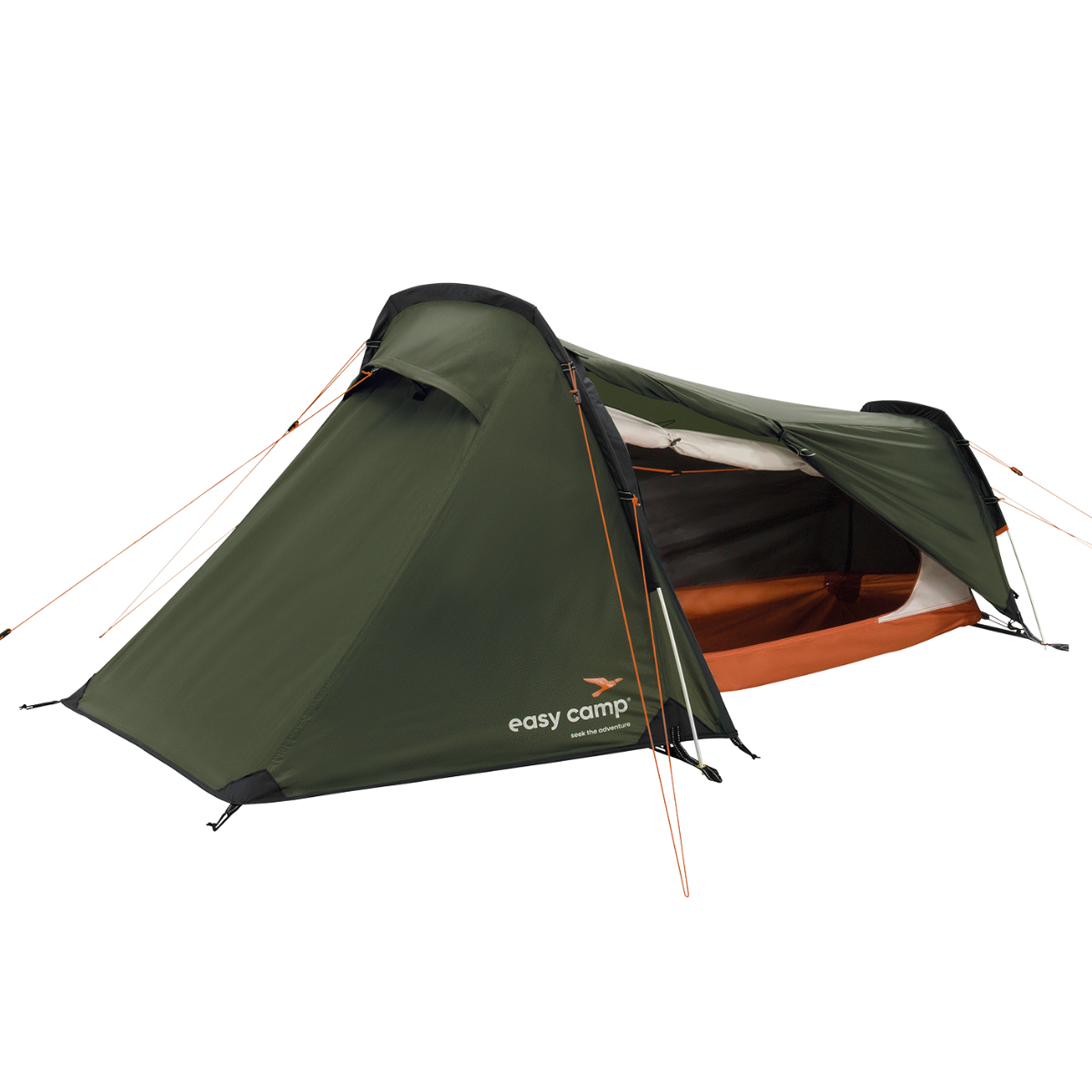
Easy Camp Sarek 1 Compact Blackroom 1-Person Solo Tent
A one-person tunnel tent weighing 1.8 kg with pack dimensions of 38 × 12 cm. A compact option for bike tours and solo trekking.
Consider: Check the tapered foot section against your mat; proper staking and guy line tension is important for the tunnel structure.
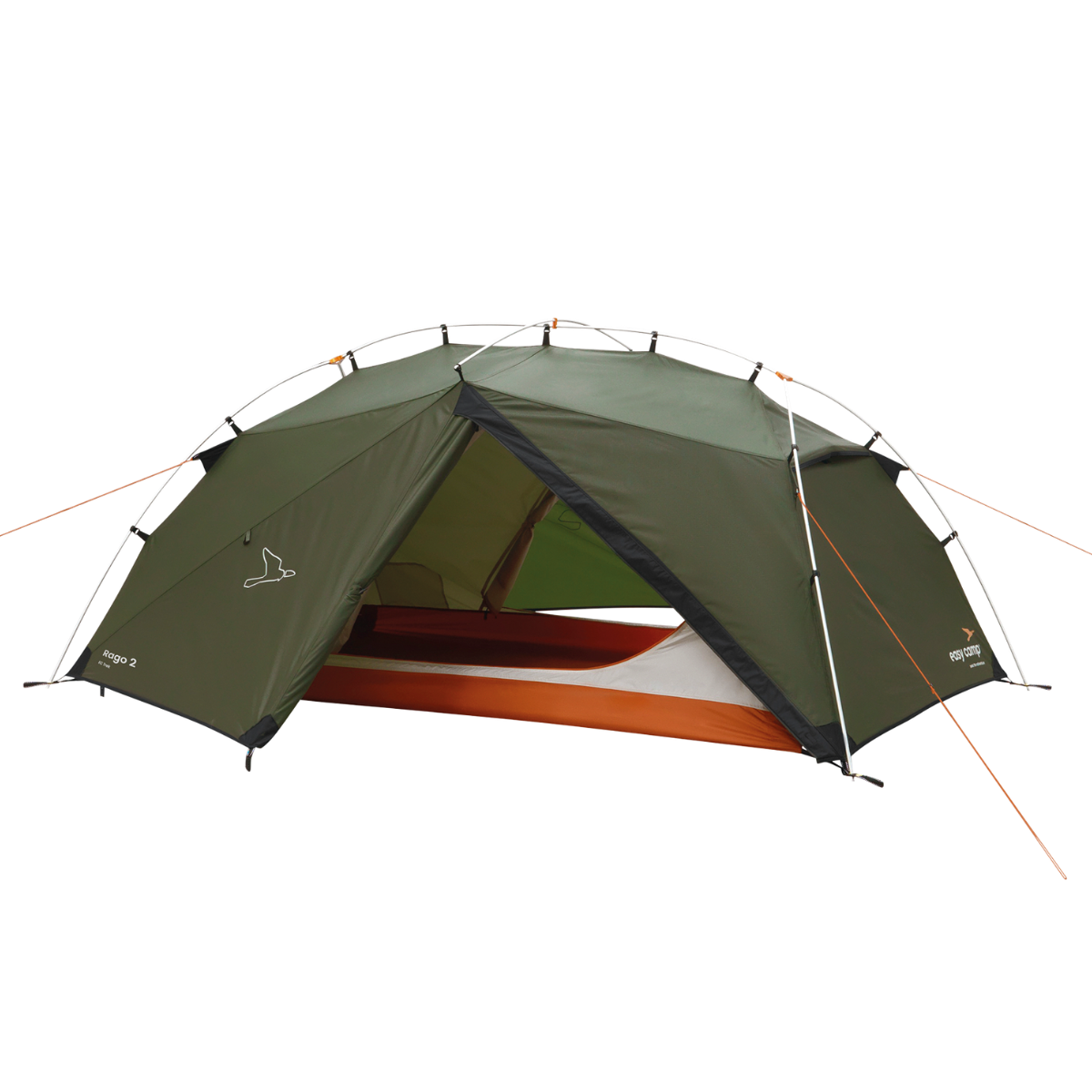
Easy Camp Rago 2 Ultralight 2-Person Tent
For two people, 2.5 kg, and a pack size of 40 × 14 cm. With dual entry, two vestibules, and a 7001 aluminum pole system, it’s practical for two people.
Consider: Even if you share the load, compare the total packed weight to your route.
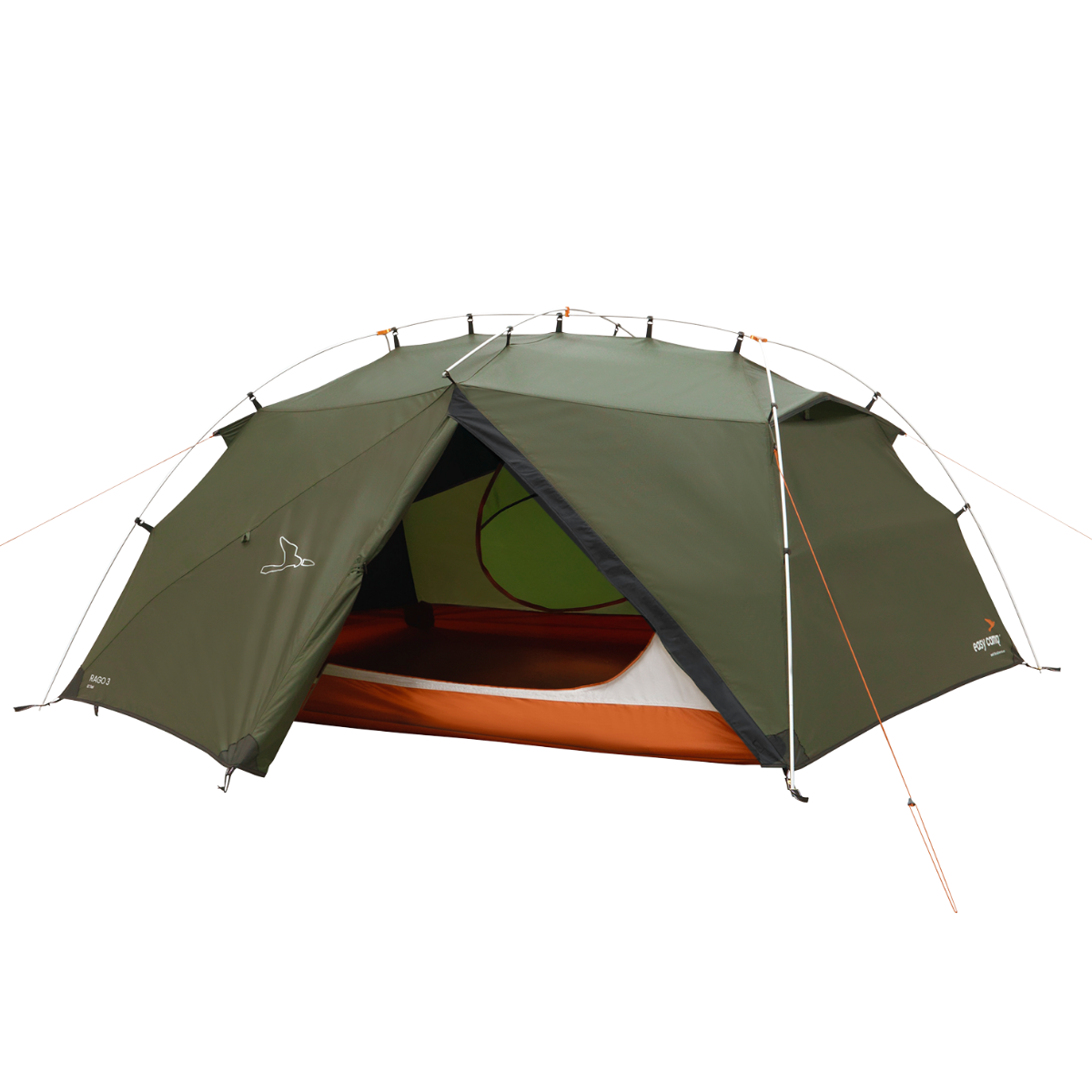
Easy Camp Rago 3 Ultralight 3-Person Tent
Sleeps three, weighs 2.9 kg; packed dimensions: 42 × 15 cm. With two entrances and two separate vestibules, it’s a good option even for trips where two people want extra space.
Consider: Keep in mind that a larger sleeping area increases the carrying load and the floor space required at the campsite.
A freestanding tent or a tent supported by guy lines?
In a freestanding dome structure, the frame can support the tent on its own. However, the tent must still be secured with stakes and guy lines in windy conditions; “freestanding” does not mean that securing it is unnecessary. A tunnel or guy-supported design can be lightweight and practical with well-chosen stake points; the setup plan becomes even more important on hard, rocky ground.
4. Family, Car and Weekend Camping
At a family camp, the tent typically serves as both a sleeping and living area for several days. In this case, the size of the common area, the ceiling height, the number of entrances, the separation of sleeping compartments, and the amount of time spent inside the tent during rain become more important factors than weight.
Compact for the weekend, spacious for a longer stay
An easy-to-set-up four-person dome tent for a one- or two-night car camping trip can provide shelter without taking up as much space as a large family tent. For a family with three children or a group planning to stay in one spot for a few days, a separate sleeping area and a spacious entrance can be much more practical. If you want to be able to stand up while getting dressed, check not only the exterior peak height but also the width of the interior area where you can stand upright.
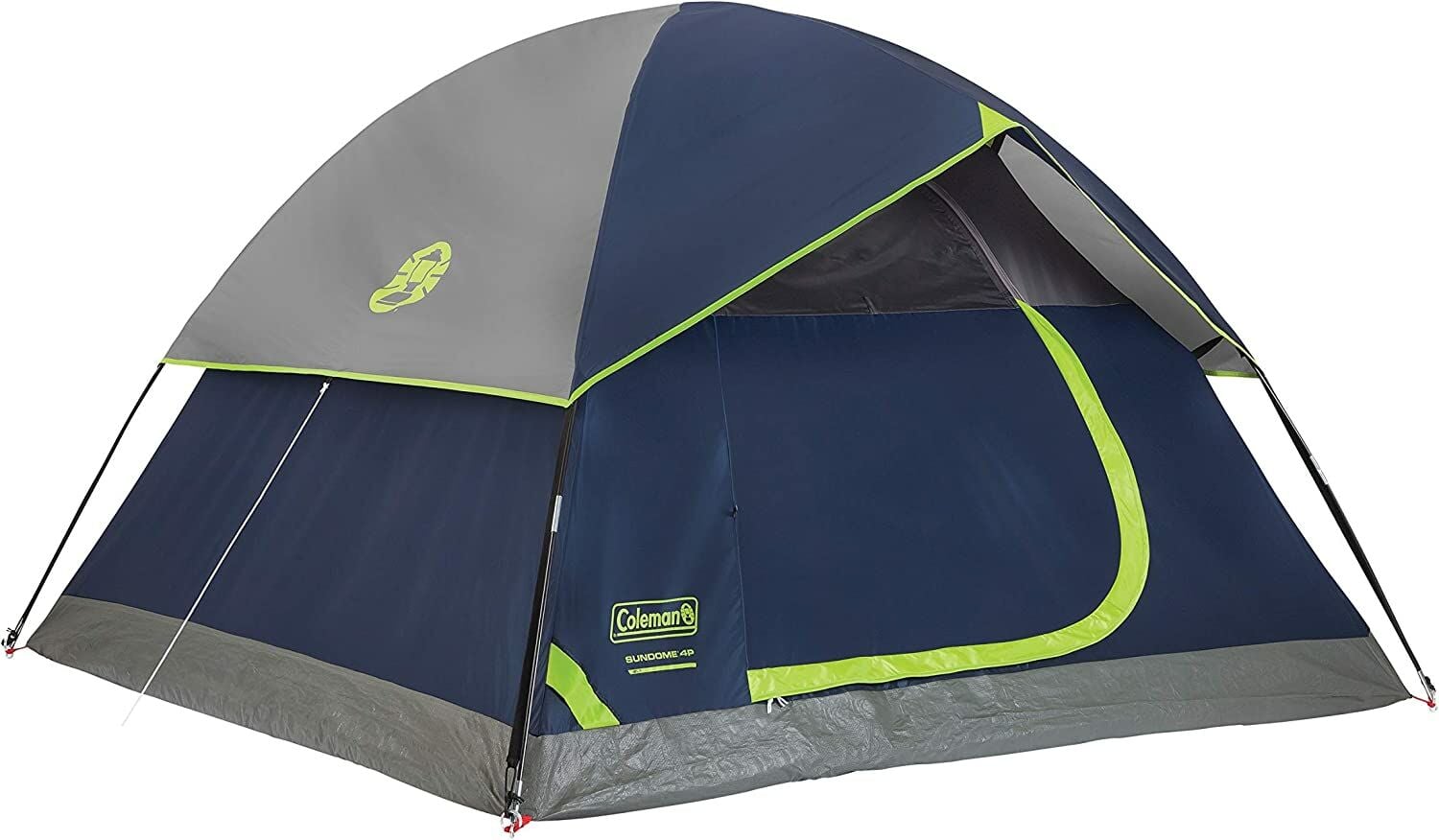
Coleman 4-Person Sundome Tent
The four-person Sundome is a good example for those looking to try out the standard four-person option for weekend car camping trips.
Consider: Don't confuse sleeping capacity with living space.
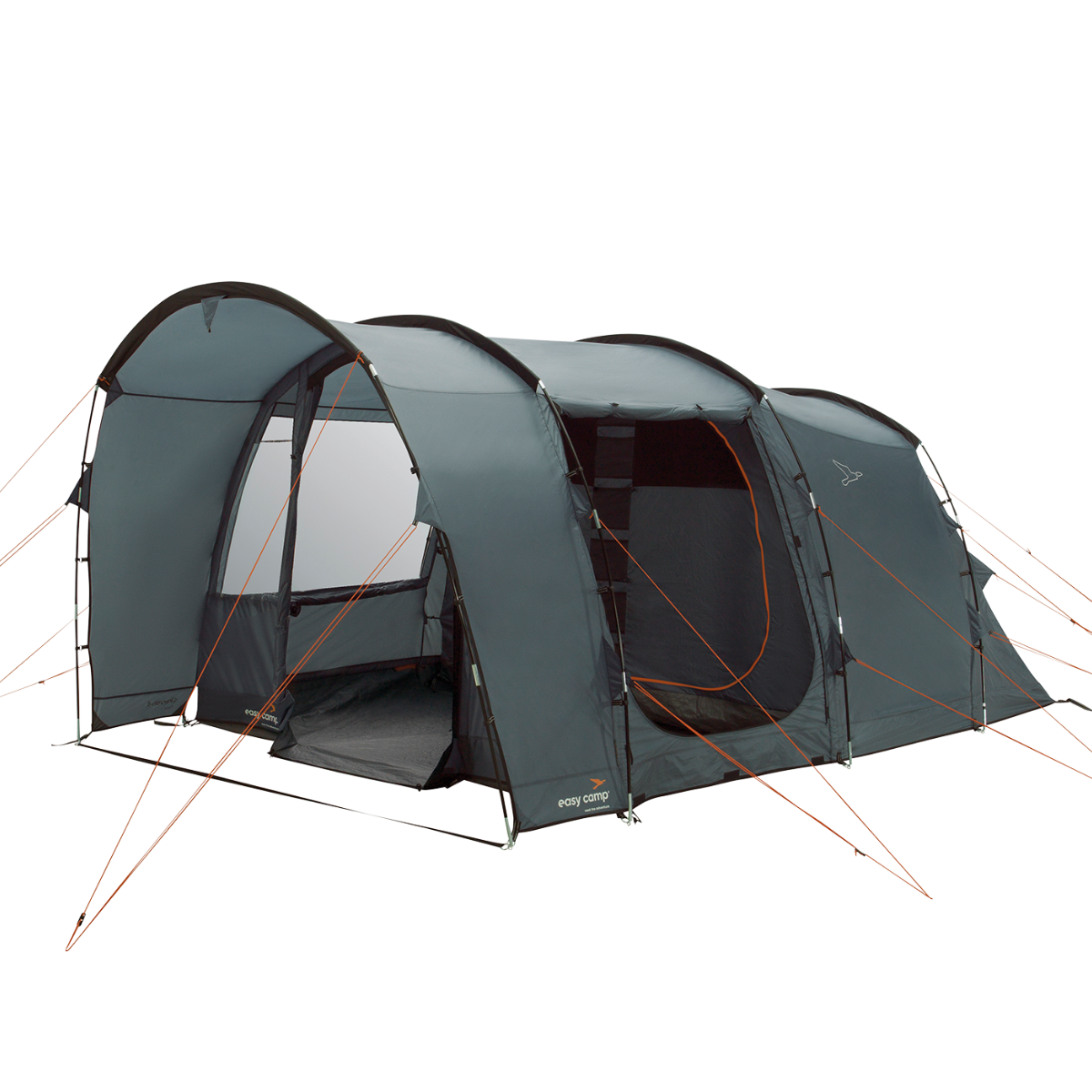
Easy Camp Skarvan 4 Blackroom 12 M² & 4-Person Tall Family Tent
A four-person family tent; the product description specifies a 12 m² area and a Blackroom sleeping compartment.
Consider: Check that your campsite has room for the tent’s full footprint and extra space for guy lines.
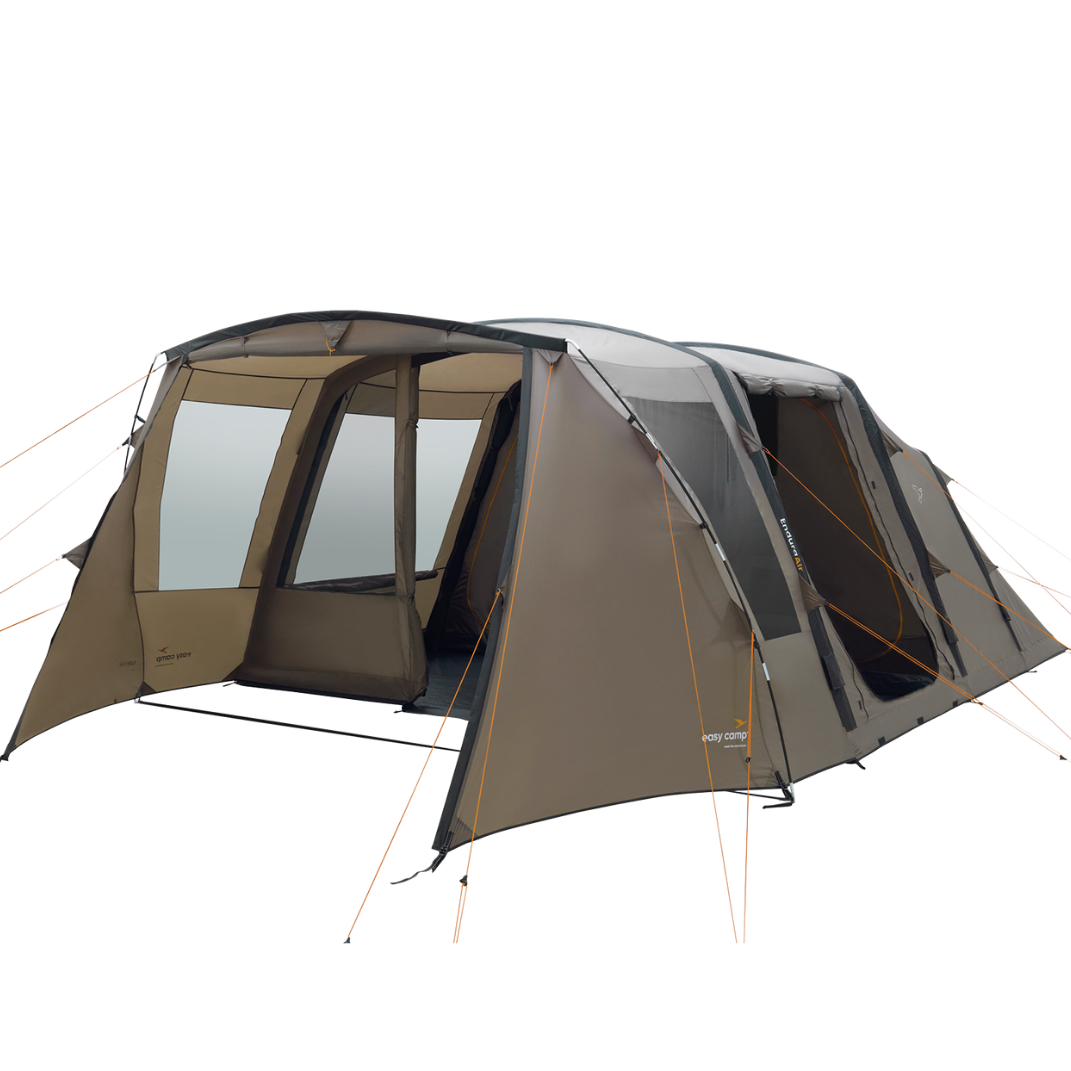
Easy Camp Kullen 6 Air Blackroom 23 M² & 6-Person Inflatable Family Tent
A 23 m² inflatable family tent for six people. The air-pole structure offers a different setup approach from the traditional pole system.
Consider: Consider the pump, the packed weight, and the space it takes up in the vehicle's trunk.
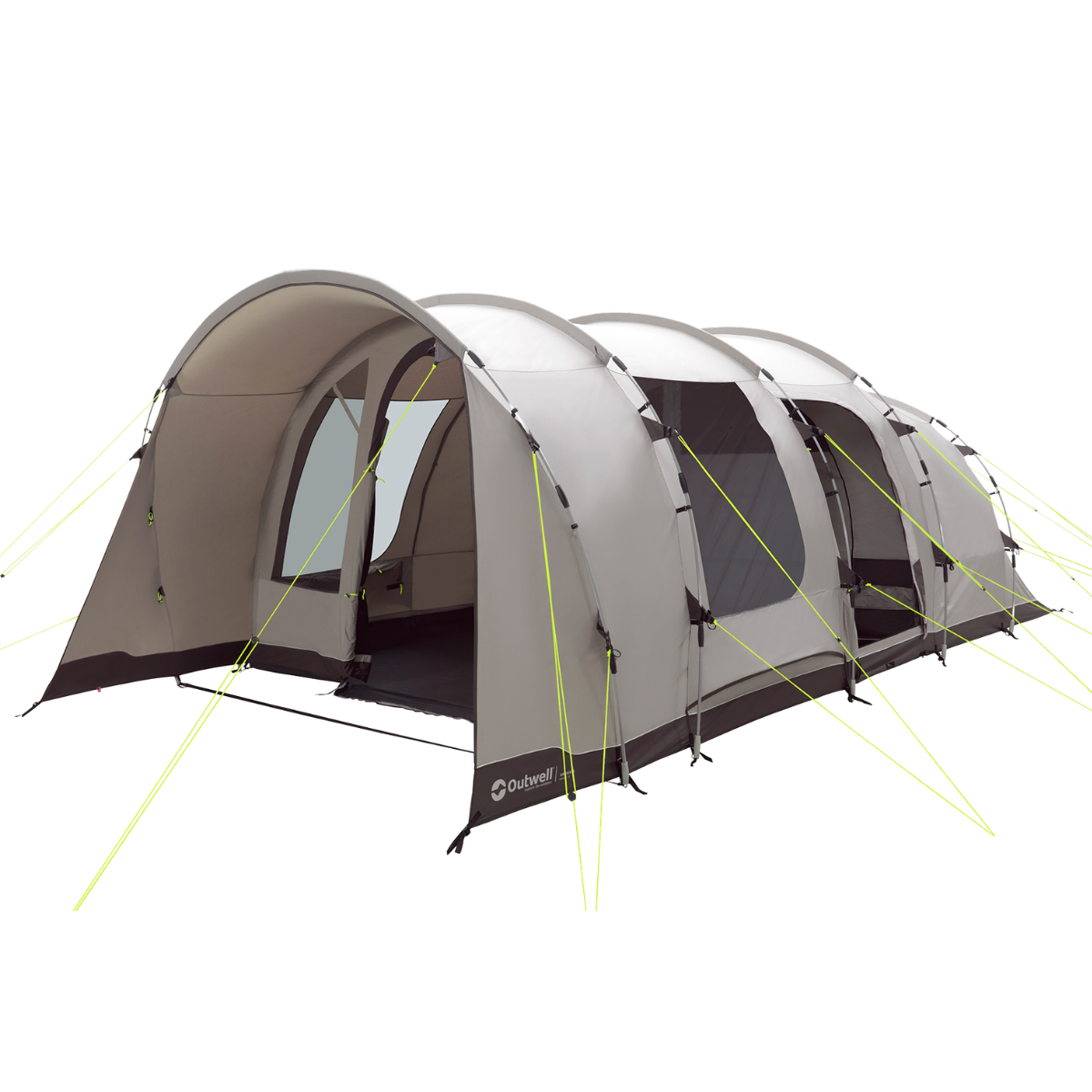
Outwell Ohio 5 TC Premium 20 m² & 5-Person Breathable Polycotton Premium Family Tent
A 20 m² polycotton family tent for five people. With its spacious living area and fabric type, it’s a great option for extended stays with a vehicle.
Consider: Check the fabric's care and drying requirements, the packed size, and your transport options.
5. Ventilation and Shade for Summer Camping
At summer camp, in addition to the air temperature, nighttime humidity, insects, and the temperature inside the tent during the day when it’s exposed to the sun are all important factors. A design featuring large mosquito netting panels, cross-ventilation, and an rainfly that allows air to circulate may be a good choice in hot conditions. However, keeping the door fully open can lead to unexpected rain and insects getting inside; be sure to balance airflow with protection.
The sunshade, Blackroom, and outdoor awning serve different purposes
A blackout sleeping compartment can help reduce morning light. This feature alone does not guarantee that the tent will stay cool or prevent condensation. Also consider the ventilation panels, the direction of the wind, and the times of day when the sun hits the campsite.
Using a separate tarp outside the tent is a different solution from trying to create more living space inside. Especially when camping with a vehicle or during extended stays, a tarp can provide a seating area sheltered from the sun or rain.
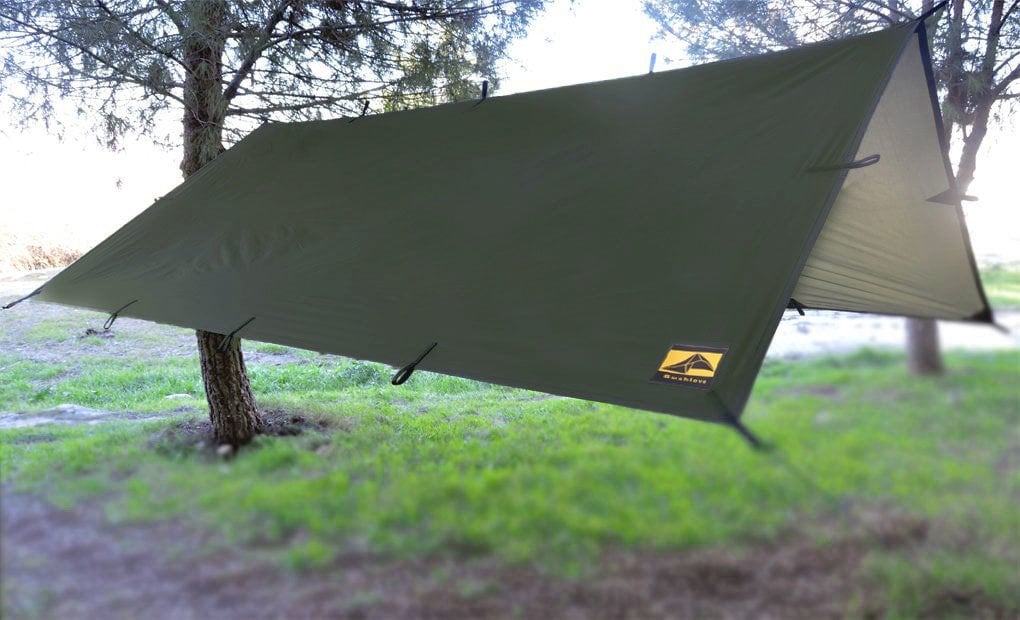
Bushlove Bushcraft Premium 4-Season Tarp, 3m x 3m
Bushlove Premium 3 × 3 m tarp; the product description mentions polyester with a membrane and heat-sealed center seams. An option for creating a separate awning or rain shelter outside the tent.
Consider: A tarp does not replace a closed tent, a mosquito net, or a groundsheet. Proper anchor points and safe setup are required; open flames and stoves must not be used inside the tent.
If you plan to use an outdoor awning for your summer camp, make sure the guy lines do not block walkways, that the slope prevents rainwater from pooling, and that you use tie-down methods that do not damage the tree. For a route where rain is possible, the Rainy-Day Camping Guide provides a separate checklist.
6. Winter Camping and High Altitude
The goal of winter camping isn’t just to keep the inside warm; the shelter must maintain its shape in wind and rain, the entrances must remain accessible, and sleeping gear must be kept dry. The seasonal rating alone does not define a model’s structural limits. Snow load, wind resistance, and the manufacturer’s specified conditions of use must also be considered.
Deciding between 3-season and 4-season
Three-season tents are generally designed for the typical rain and wind conditions of spring, summer, and fall. Mountaineering tents, specifically designed for routes where the tent will be exposed to snow accumulation and strong winds for extended periods, feature a different construction. More frequent pole intersections, appropriate guy line attachment points, a lower profile, and details that reduce snow ingress may be key features in this category. The four-season label does not necessarily imply the same level of testing or suitability for severe winter conditions.
The risks associated with a sheltered forest campsite at low elevation are not the same as those of a high-altitude camp on an exposed ridge. If it is unclear whether the expected wind or snow load falls within the product’s documented limits, you should choose a safer route or postpone setting up camp.
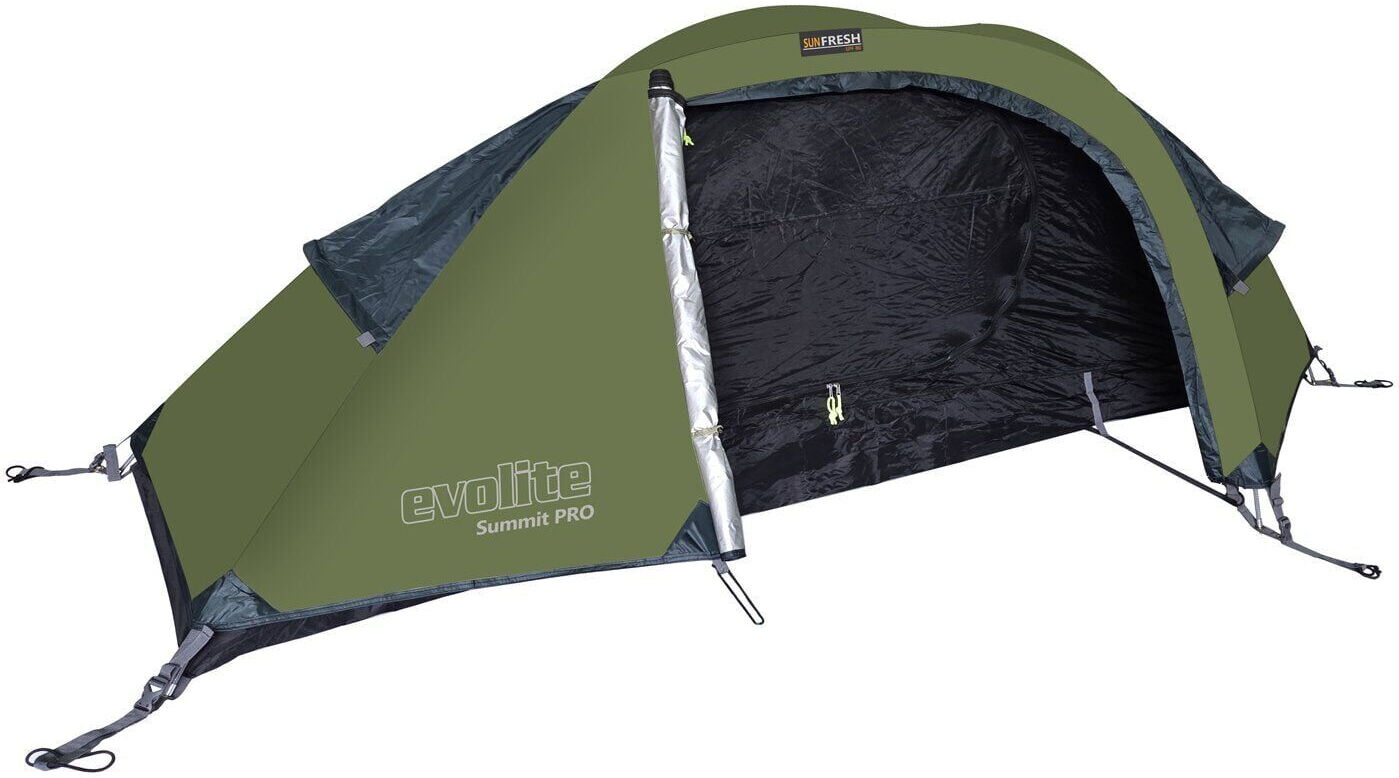
Evolite Summit Pro 4-Season Tent Sun Fresh UPF80 Mz
According to the store description, it is a one-person tent weighing 2.6 kg; the rainfly has a hydrostatic head rating of 3,000 mm, the floor has a rating of 5,000 mm, it features three Durawrap poles, and has closable vents.
Consider: Do not interpret the four-season designation as a guarantee of absolute resistance to heavy snow loads or storms.
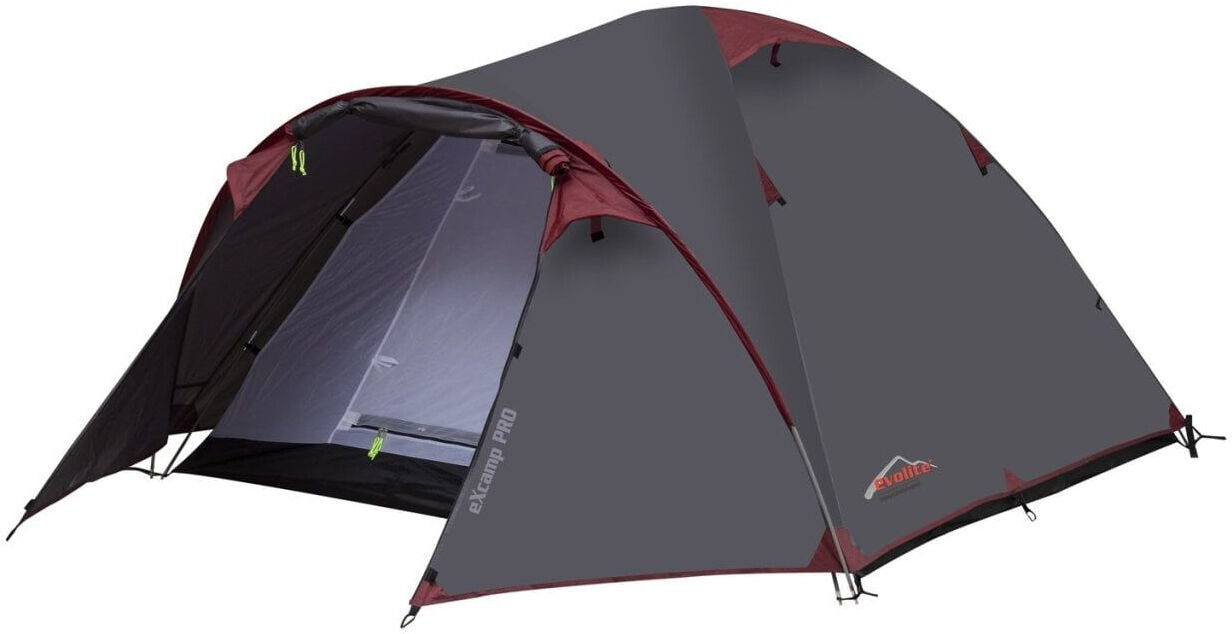
Evolite Excamp 4 Pro 4-Season Tent Mz
A four-person double-wall dome tent; 3.9 kg, three 9.5 mm Durawrap poles, dual entrances, and two vestibules. Outer tent: 3,000 mm; floor: 5,000 mm.
Consider: The manufacturer's limits regarding wind and snow loads at high altitudes must also be verified.
Don’t rely solely on your shelter in cold weather. Choose a sleeping bag and pad based on nighttime temperatures. To understand the difference between the “Comfort,” “Limit,” and “Extreme” ratings for winter sleeping bags, you can use the winter sleeping bag selection guide.
7. How to Compare Technical Specifications
It’s easy to compare the product names and capacity of two tents. The real decision becomes clear once you understand what the technical specifications mean in everyday use. Evaluate the following criteria for each product together; a strong feature doesn’t automatically make up for other shortcomings.
Hydrostatic Head, Seams and Floor Protection
The hydrostatic head rating, expressed in millimeters, indicates the fabric’s resistance to water pressure under laboratory conditions. The rainfly and floor may be specified with different values. Floor protection is also important due to conditions such as kneeling on the floor or applying pressure with equipment. Seam tape, the protection of door zippers, the tent’s openings, and proper tension also affect water ingress. A single millimeter value does not guarantee that the entire tent will remain dry under all conditions.
Pole material and frame geometry
Aluminum, fiberglass, and reinforced pole systems have different weight, flexibility, and cost characteristics. Wind resistance cannot be determined based solely on the material name. The pole diameter, intersection points, connections, rainfly profile, and guy line placement are all determining factors. Inflatable poles, however, are a separate type of structure; air pressure, repair options, and setup instructions must be evaluated on a product-by-product basis.
Single-layer, double-layer, and condensation
In a double-layer design, there is an air gap between the inner tent and the rainfly. This gap, along with proper ventilation, helps manage moisture that forms on the inner surface. However, condensation may still occur due to breath, wet clothing, and moisture rising from the ground. If the rainfly and inner tent are touching, droplets may be carried into the sleeping area. Use the guy lines correctly during setup and try not to completely close off the ventilation openings.
Total dimensions of the tent and inner tent dimensions
The product’s exterior dimensions are not the same as the interior sleeping area. The storage space in front of the door, the entryway, and the living area may be included in the total floor plan. Compare the width of your mats, the length of your sleeping bag, and the space required for gear with the inner tent layout. For large family tents, also factor in the campsite and the area where the guy lines will extend.
Setup and Maintenance
For those setting up their tent in the rain, it may be important to be able to set up the rainfly first or along with the inner tent. When practicing at home, learn which parts are attached first and where the guy lines are secured. When you return from a camping trip, don’t leave the wet tent packed up for a long time; dry and store it according to the manufacturer’s care instructions. Regular inspections help prevent minor damage from turning into major problems.
8. The Sleeping System That Complements Your Tent
A tent provides shelter from wind and rain, but it does not, on its own, determine the level of insulation in your sleeping system. To reduce heat loss between your body and the ground, you’ll need an appropriate sleeping pad and a sleeping bag suitable for the nighttime temperature.
Sleeping Pads: R-Value and Floor Plan
R-Value indicates a mat’s resistance to heat transfer. A higher value generally provides better insulation; however, R-Value should not be estimated based on thickness alone. The mat’s length and width must also fit inside the tent’s interior. Be sure to check the product’s floor dimensions, especially when using two wide mats.
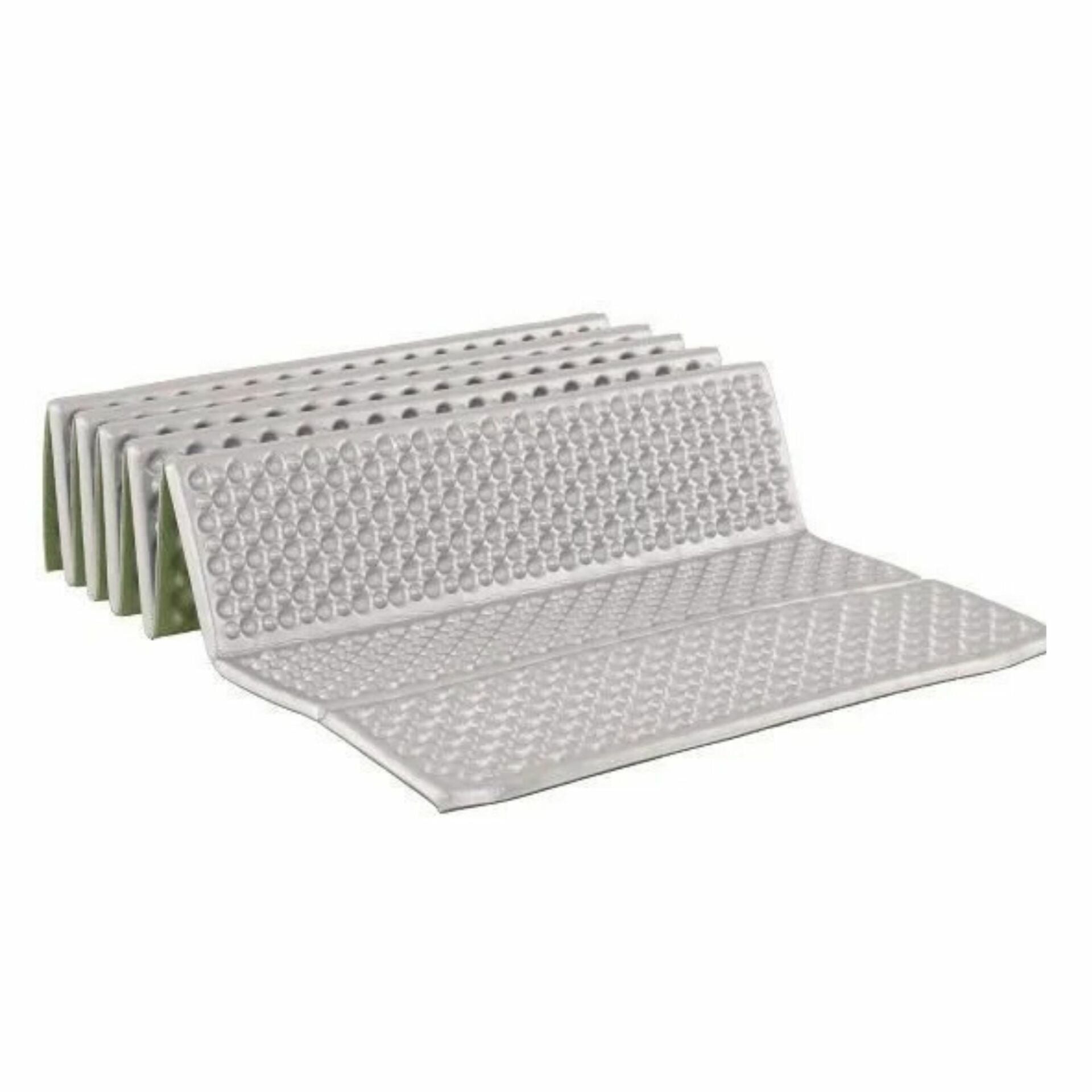
Robens Zigzag Slumber Pro R-2.4 Insulated Folding Sleeping Pad
192 × 60 × 2.8 cm, 620 g; XPE closed-cell foam mat listed on the product page with an R-value of 2.4.
Consider: Do not assume that it will be sufficient on its own in cold ground conditions.
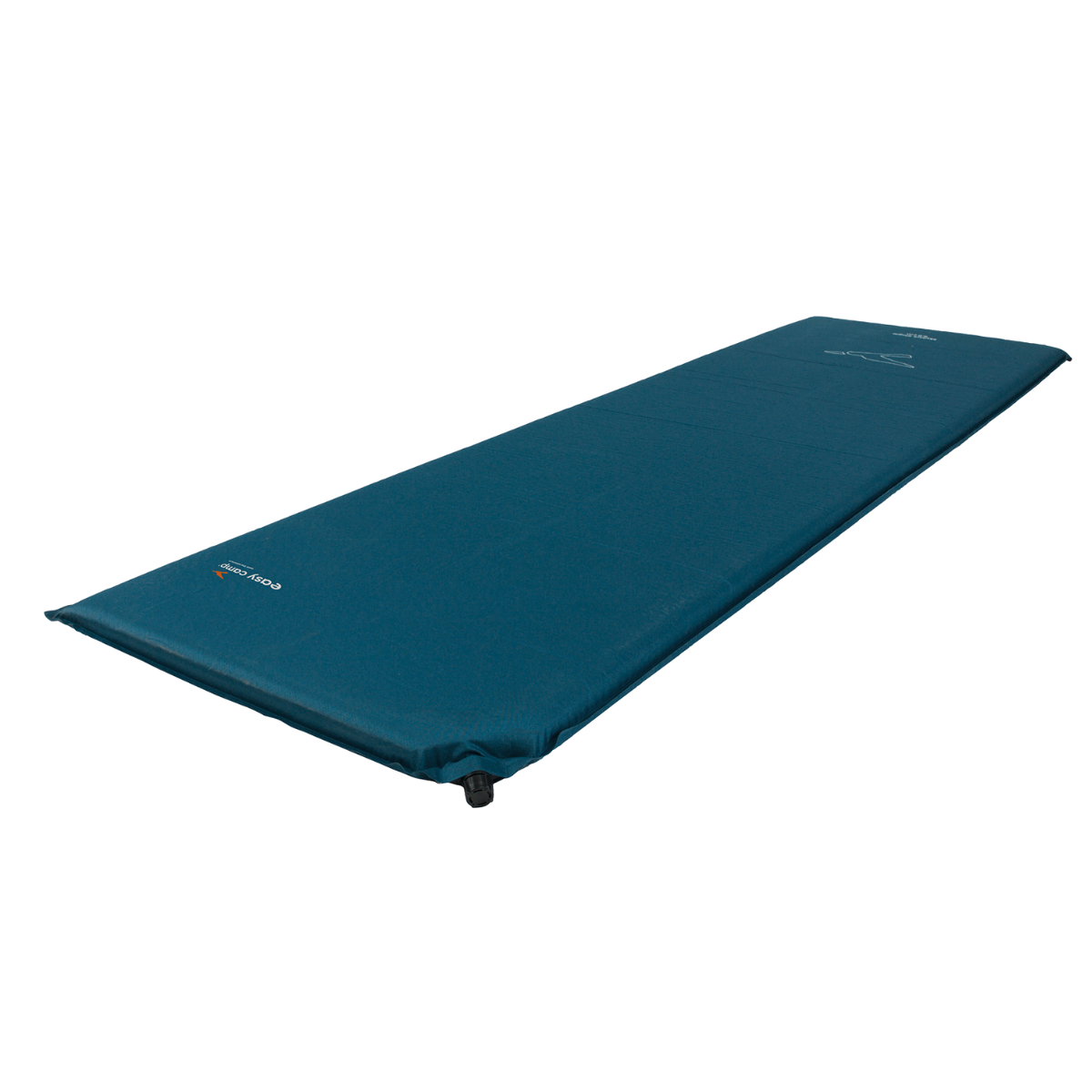
Easy Camp Skylark Single 5.0 cm Insulated Inflatable Sleeping Pad R-5.5
An insulated, inflatable single-person mat listed as 5 cm thick with an R-value of 5.5. An option to consider when evaluating the need for higher insulation.
Consider: Make sure the mat fits within the tent layout based on its inflated dimensions; check the repair and transport requirements.
You can explore mat options in the sleeping pads category and make an informed decision about insulation using the R-Value guide for sleeping pads. When choosing a sleeping bag, evaluate the product’s temperature ratings and intended use separately; the sleeping bag category brings together options tailored to this purpose.
On long hikes, the capacity of your carrying system also affects your choice of shelter. With the Outdoor Backpack Selection Guide, you can plan how to carry your tent, sleeping bag, and sleeping pad together.
9. Comparison by Camping Style
First, find your own row. Then, when selecting a model, don’t choose features from other rows just because they offer higher values.
| Camping Style | Key Feature | What to Check |
|---|---|---|
| Solo Trekking / Bikepacking | Compact packed size, single-person space, low total weight | Sleeping pad dimensions, vestibule, packed pole length |
| Two-Person Trekking | Shared load, two entrances and vestibules | Two sleeping pads side by side, rainfly setup |
| Weekend Car Camping | Easy setup, adequate capacity | Campsite size, daytime living space |
| Extended Family Camping | Standing headroom, shared living area, entrance layout | Car cargo space, air beams or poles, setup area |
| Hot and Humid Summer Camping | Airflow, insect mesh, shade | The ability to use the ventilation system during rain |
| Snowy / Windy Winter Camping | Frame and guy lines suited to expected weather | Snow and wind limits, choosing a safe location, sleep system insulation |
10. Common Mistakes When Choosing a Tent
1. Prioritize the highest hydrostatic head rating above all else
Water resistance is important, but the seams, door seals, base, tensioning system, and ventilation all work together. Even a tent with a high hydrostatic head rating can develop problems if set up incorrectly.
2. Considering the number of people alone to be sufficient
A "two-person" label doesn't necessarily mean there's enough room for two large mats and two large bags. Be sure to check the inner tent layout.
3. Choosing the Same Model for Every Camping Trip
Carrying a family tent on foot every day can be a challenge; spending days sitting with the whole family in a minimalist trekking tent in the rain also reduces comfort.
4. Treating the four-season label as a storm guarantee
Check the manufacturer’s terms of use and structural limitations. In challenging conditions, a weather forecast and a safe return plan are just as important as the equipment itself.
5. Leaving the First Setup Until You Reach the Campsite
Set up your new tent at home or in a safe outdoor area. Familiarize yourself with the layout of the stakes, poles, guy lines, inner tent, and rainfly. This way, you’ll be able to identify any missing parts or incorrect setups before you set out on your trip.
6. Think of the tent as thermal insulation
Don’t expect to sleep comfortably in the cold without the right sleeping system. The choice of a sleeping pad and sleeping bag is based on technical criteria that are independent of the shelter.
11. Purchasing Checklist
Compare the features on the product page with the list below. You can check the boxes based on your own camping plan.
12. Frequently Asked Questions
Can I camp in any season with just one tent?
If the conditions of your camping trip are similar, a versatile model may suffice. However, summer heat, heavy snow, open high-altitude terrain, and long trekking routes present different requirements. Look beyond the seasonal label and assess the product’s actual limits of use.
Should you buy a two-person or a three-person tent for two people?
If portability is a priority on your hike, you may want to choose a two-person model with the right interior dimensions. A three-person model can offer more comfort for car camping or if you need extra space for gear. Measure the width of the mats to help you decide.
Are ultralight tents always better?
No. Lightweight materials provide carrying comfort; however, living space, fabric durability, setup requirements, and weather protection are also important. Compare the total packed weight and actual usage conditions.
Should you choose an inflatable tent or a pole tent?
Inflatable family tents can offer a different level of ease of setup in large living spaces. Pole-based models may offer more compact portability or different frame geometries. Compare the pump, pack size, and maintenance and repair requirements.
Is a four-season tent enough for winter?
No. You need to consider snow load and wind conditions, a safe campsite, a sleeping bag, a sleeping pad, the weather forecast, and a backup plan. Not all four-season models are suitable for severe mountaineering conditions.
Are the water droplets inside the tent a leak?
Not always. Condensation can form when moist air comes into contact with a cold surface. Check ventilation and the gap between the rainfly and inner tent; if you suspect that rain is entering through a specific seam or opening, inspect that area.
Can a tarp be used instead of a tent?
Under the right conditions, experienced users can use a tarp as an open shelter. However, it may not provide an enclosed inner tent, protection from insects, or floor insulation. Plan for wind and rain direction, guy line attachment points, and a separate sleeping system.
Is choosing a sleeping pad separate from choosing a tent?
The two decisions complement each other. The mat must fit inside the inner tent, and its R-value must be appropriate for the heat loss from the ground. The tent alone does not provide the insulation that the mat is designed to provide.
Choose the Right Shelter for Your Camping Trip
First, determine your intended use, then compare the actual interior dimensions, carrying weight, and weather protection features. In the Ersin Outdoor collection, you can explore options suited for trekking, family outings, solo adventures, and different seasons.
Check out our camping tents and tarps